What if the side of a local library or a coastal walkway could do more than just exist, acting instead as a living classroom for Ireland's unique ecosystems? It's a common frustration to see public areas filled with generic signage that lacks scientific accuracy or, sadly, falls victim to vandalism because it doesn't resonate with the local community. You likely feel that our shared spaces should reflect the beauty of the natural world whilst providing something truly durable and educational. This is where professional wildlife art for public spaces steps in, transforming these environments into vibrant, biodiverse hubs that foster a genuine connection with nature.
Let's explore the intersection of meticulous illustration and public design, showing how accurate portrayals of local species (the kind that require hours of patient observation) can become a tool for conservation. We will examine how a wildlife mural or a wildlife information board improve community wellbeing and protects our local heritage through award-winning design and scientific precision. You'll discover how thoughtful, specialist art can bridge the gap between complex biological data and the heart of a local community, creating a lasting legacy for both people and wildlife.
Key Takeaways
- Learn how professional wildlife art for public spaces moves beyond simple decoration to become a functional tool for biodiversity communication and community education.
- Understand the "Biophilia Effect" and how nature-themed installations can measurably reduce stress in urban centres whilst boosting local engagement with Biodiversity Action Plans.
- Discover how to choose between high-impact wildlife murals and detailed illustrated information boards based on your project's spatial needs and educational goals.
- Explore why scientific accuracy and anatomical precision are vital for creating durable educational tools that accurately represent Ireland's native flora and fauna.
- Gain insights into the collaborative process of commissioning a specialist who understands the delicate balance between artistic vision and biological facts.
What is Wildlife Art for Public Spaces?
At its heart, wildlife art for public spaces is the intentional use of visual representations of native flora and fauna to invite community interaction. It's much more than a decorative mural; it's a functional piece of infrastructure designed to communicate the value of local ecosystems. Whilst we often think of public art as purely aesthetic, this specific discipline bridges the gap between scientific observation and community engagement. It turns a blank wall or a quiet corner of a park into a living narrative of the species that share our environment.
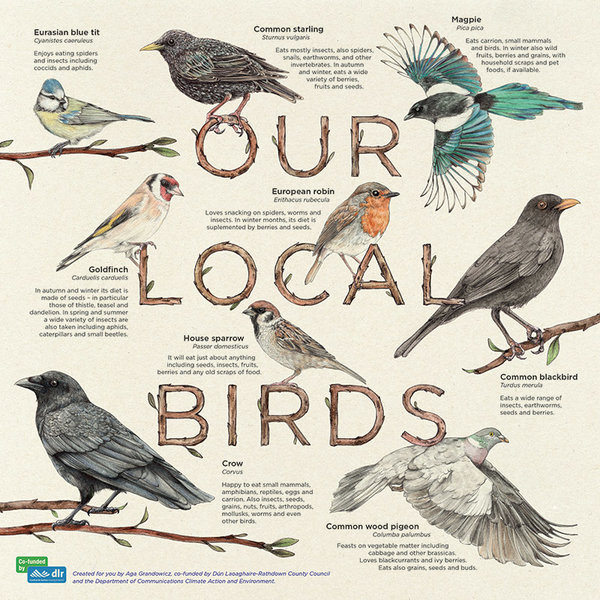
We're currently seeing a significant shift in how we approach nature in our built environments. We've moved away from generic nature scenes (the kind that could be anywhere from Sweden to Spain) and toward functional biodiversity communication. This means the art is grounded in local reality. Whether it's a detailed illustration of a red mason bee or a large-scale mural of a grey heron, the focus is on accuracy and relevance. You'll find these works in diverse settings across Ireland, including bustling urban centres, primary school grounds, hospital courtyards, and local parks. Each location offers a unique opportunity to ground the community in its specific Irish context.
Representing local species is vital for fostering a sense of place. When people see the wildlife that actually lives in their neighbourhood depicted with care and precision, it builds a sense of pride and stewardship. It's a way of saying that this specific patch of earth matters. To understand the broader context of this movement, it's helpful to look at What is Ecological Art? and how it seeks to highlight environmental health through creative expression.
The Evolution of Nature Interpretation
The way we interpret nature in public has changed. In many places, we've moved past those sun-bleached, text-heavy signs that people often walk past without a second glance. Today, the focus is on immersive visual experiences. Modern illustration techniques allow us to make complex biology accessible to everyone, regardless of their scientific background. In this process, the artist acts as a translator. They take the cold, hard facts of biology and turn them into something approachable, warm, and visually arresting. It's about showing, not just telling, why a particular species is fascinating.
Art as a Tool for Ecological Literacy
Visual art is often far more memorable than traditional text when it comes to species identification. A vibrant, anatomically correct illustration of a kingfisher sticks in the mind much longer than a paragraph describing its plumage. This is especially true for engaging younger generations. By creating "teachable moments" in everyday environments, we can spark curiosity in a child on their way to school or a family out for a weekend walk. When wildlife art for public spaces is done correctly, it becomes a durable educational tool that starts conversations and encourages people to look a little closer at the world around them.
The Benefits of Integrating Wildlife Art into the Public Realm
Public art is frequently viewed as a final flourish, a decorative layer added once the "real" work of urban planning is complete. However, when we consider the strategic role of wildlife art for public spaces, it becomes clear that these installations are functional assets. Most local authorities across Ireland now operate under specific Biodiversity Action Plans (BAPs). These plans are essential documents (often quite dense and data-heavy) that outline how we intend to protect our natural heritage. Art acts as the bridge between these technical reports and the people they are meant to serve. It translates abstract conservation goals into a visual language that resonates at street level, making the community feel like active participants in local nature recovery.
There is also a very practical, protective benefit to installing bespoke artwork. We've all seen how generic, mass-produced signage often becomes a target for graffiti or neglect. When a public space is transformed with a high-quality mural or an illustrated board that reflects the local environment, a shift in perception occurs. A sense of community pride and ownership takes root. People are far less likely to vandalise something that feels like a "community treasure" rather than just "public property." This transformation of grey infrastructure into vibrant, educational landmarks is a powerful way to foster respect for our shared environments.
Supporting National Conservation Goals
Visualising conservation is a vital step toward public transparency. When an environmental NGO or a local council begins a habitat restoration project, the initial stages can look messy or confusing to the untrained eye. By using illustrated information boards, we can show the public the "future" of that space, detailing the species we hope will return. This approach is mirrored internationally, such as in the U.S. Fish & Wildlife Service Community Gallery, where art is used to deepen the connection between citizens and protected lands. In Ireland, this might involve highlighting the delicate return of the Pine Marten or the specific needs of our native pollinators (which often requires a deep dive into local biological records to ensure every flower depicted is the right one).
Psychological Wellbeing and Biophilic Design
The "Biophilia Effect" suggests that we have an innate, biological need to connect with nature. In high-stress areas like hospital courtyards or busy transport hubs, even artistic representations of the natural world can provide a measurable mental reset. Research suggests that viewing nature-themed art can lower stress levels and improve mood, creating a pocket of calm in an otherwise frantic urban setting. These installations encourage people to linger, observe, and spend more time outdoors, which is a key outcome for any public health initiative. If you're curious about how to bring these benefits to your local area, exploring professional wildlife murals is a wonderful way to start that conversation.
Murals vs. Information Boards: Choosing the Right Medium
Deciding on the right format for wildlife art for public spaces usually comes down to a choice between immediate visual impact and long-term educational depth. It's helpful to think of your project as a conversation with the public. Do you want to stop people in their tracks with a bold, emotional statement, or do you want to invite them to linger and learn the finer details of the local ecosystem? Both mediums have their strengths, and often, the most successful public environments use a thoughtful combination of the two to reach different audiences.
Budgetary considerations also play a significant role in this decision. A large-scale mural is a significant investment in a single, high-impact location, whereas a series of illustrated boards can distribute information across a wider geographical area, such as a nature trail or a sprawling park. When we sit down to discuss a new commission, we look at the physical constraints of the site, the intended "dwell time" of the visitors, and the specific conservation messages that need to be conveyed to the community.
Wildlife Murals: Making a Bold Statement
Murals are about emotion and scale. They have the power to transform "dead" urban spaces, like the grey gable ends of terrace houses or the concrete walls of school playgrounds, into vibrant biodiversity showcases. The technical process of creating these works is quite involved, requiring meticulous surface preparation and an understanding of how natural light will interact with the colours throughout the day (not to mention a steady hand on a multi-storey scaffold). These installations serve as a permanent reminder that nature belongs in our urban centres just as much as in the countryside, making local species impossible to ignore.
Illustrated Information Boards: Deepening Knowledge
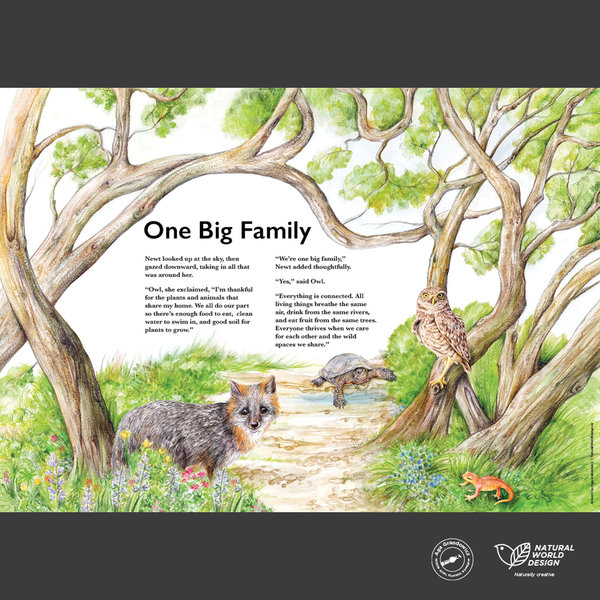
If the goal is to explain the complex life cycle of a native pollinator or the migration patterns of coastal birds, illustrated information boards are the superior medium. These boards allow for the combination of precise scientific illustration and clear, accessible typography. For these to be effective as durable educational tools, we prioritise high-quality, weatherproof materials and UV-resistant inks that can withstand the Irish rain and sun. Placing these boards strategically along nature trails or within specific park habitats creates a self-guided educational experience that rewards the curious observer with accurate, fascinating facts about the world right in front of them.
Ultimately, the choice between a mural and an information board depends on the story you want to tell. A mural provides the "wow" factor that builds community pride, whilst the boards provide the "how" that builds lasting ecological literacy. By understanding the spatial and educational requirements of your project from the start, we can ensure the artwork serves both the community and the wildlife it celebrates.
Ensuring Scientific Accuracy and Artistic Quality
When wildlife art for public spaces is commissioned, we're doing more than just filling a visual void. We're creating a reference point for the community. If an illustration of a bumblebee is "generic" or anatomically incorrect, it fails its primary mission as an educational tool. A child looking at a mural should be able to go into their garden and recognise that exact species based on the markings they've seen in the art. This level of precision requires a deep commitment to the natural sciences, ensuring that every feather, leaf, and limb is rendered with care. It's about respecting the subject enough to get the details right.
Achieving this balance between artistic flair and scientific rigour often involves close collaboration with ecologists and local experts. It's not enough for the animal to look correct; its habitat must also be accurate. If I'm illustrating a marsh fritillary butterfly, I need to ensure the Succisa pratensis (devil’s-bit scabious) it relies on is also present and correctly depicted. This meticulous attention to detail prevents the art from becoming a mere decoration and elevates it into a reliable piece of scientific communication. For projects that require this level of precision, you can explore my professional wildlife illustration services to see how I bridge these two worlds.
The Meticulous Process of Wildlife Illustration
The journey of a single illustration begins long before the first mark is made. It starts with intensive research into local Irish species, looking at everything from the specific plumage patterns of a juvenile bird to the way a particular plant stems from the earth. Whilst digital tools offer incredible flexibility, there is a tactile quality to hand-drawn details that brings a sense of life and warmth to public installations. Scientific wildlife illustration is the intersection of rigorous observation and creative expression.
Design Principles for Public Signage
Public art must be accessible to everyone, which means the design needs to be as thoughtful as the illustration itself. This involves:
- Information Hierarchy: Organising labels and descriptions so they're easily digestible for both primary school students and seasoned naturalists.
- Harmonious Palettes: Choosing colours that complement the natural Irish landscape rather than clashing with it.
- Visual Accessibility: Using high-contrast layouts and clear fonts to ensure the information is readable for those with visual impairments.
By following these principles, we ensure that the artwork serves the widest possible audience whilst maintaining its integrity as a durable educational resource.
Collaborating with a Wildlife Art Specialist
Starting a project for wildlife art for public spaces is a collaborative journey that begins with a simple conversation about your vision for the site. It's about identifying the stories your landscape wants to tell. Whether you're a local council looking to revitalise an urban gable end or a school wanting to create a nature trail, the process is most successful when it's grounded in a shared passion for the natural world. Working with a specialist who understands the nuances of biodiversity publications ensures that your project is not just visually beautiful or even stunning, but also scientifically sound and practically functional. This expertise allows us to integrate custom illustrations into your wider environmental branding, ensuring that your physical boards, printed brochures, and digital presence all share a consistent, high-quality visual language.
The path from an initial concept to the final installation is methodical and transparent. After you submit your list of the species and habitats that need to be illustrated, I begin with research to collect their various images, then I create rough sketches to plan the overall composition, and a blueprint for your approval. Once the artwork is finalised, we move into the design phase. If it's required, I can later help to choose the most appropriate materials to ensure the printed work stands the test of time (and the Irish weather). This structured approach builds trust and ensures that the final result is something the entire community can be proud of for years to come.
The Aga Grandowicz Approach
My work is defined by a delicate balance between professional expertise and a genuine, quiet excitement for every new species I document. With a background that spans from designing complex biodiversity publications to creating large-scale wildlife murals, I bring a unique perspective to public art projects. I see myself as both a meticulous observer and a friendly guide, helping you translate scientific data into an inviting visual experience. My commitment to scientific accuracy is matched only by my dedication to community-focused design, ensuring that every project (no matter the scale) feels intimate, accessible, and deeply rooted in its local environment.
Planning Your Project
Large-scale projects require careful timeline considerations, particularly when coordinating with local conservation goals or school terms. In Ireland, there are often various funding opportunities available for biodiversity-themed art, such as community grants or local authority heritage funds, which can help bring these educational visions to life. If you have a space in mind that could be transformed into a vibrant biodiversity hub, I would love to hear your ideas. You can enquire about a custom wildlife art commission today to start our conversation.
Transforming Our Shared Landscapes
Wildlife art for public spaces is more than just a splash of colour on a wall; it's a functional bridge between scientific conservation data and the community's heart. By choosing formats like high-impact murals or detailed illustrated boards, you're investing in a tool that reduces urban stress whilst teaching the next generation about Ireland's native species. We've seen how anatomical precision and local relevance turn a simple installation into a durable educational landmark that deters vandalism and builds community pride.
As a specialist in biodiversity publications with award-winning design experience, I provide national coverage across Ireland to help you bring these visions to life. Every project is an opportunity to document the fine details of our natural world with accuracy and warmth. If you're ready to transform your local environment into a space that celebrates and protects our shared heritage, I'd love to collaborate with you. Please explore professional wildlife illustration and mural services to see how we can begin this creative journey together. Let's work to make our public spaces as vibrant and biodiverse as the nature that inspires them.
Frequently Asked Questions
How much does a wildlife mural for a public building typically cost?
The cost of a mural depends on various factors, including the dimensions of the wall, the complexity of the species depicted, and the specific site conditions. Every commission is unique; therefore, it's best to discuss your project's specific requirements to understand the necessary investment. Factors such as surface preparation, the need for access equipment like scaffolding, and the level of detail required for scientific accuracy will all influence the final project scope.
What materials are used to ensure information boards are weatherproof?
It's good to prioritise longevity by using architectural-grade materials such as powder-coated aluminium or high-pressure laminates that are specifically designed for the Irish climate. These substrates are paired with UV-resistant inks and anti-graffiti coatings to protect the illustrations from sun damage and rain. This methodical approach ensures that your educational tools remain vibrant and legible for many years, even in exposed coastal or rural locations across Ireland.
Can wildlife art help our school achieve its biodiversity goals?
Yes, integrating wildlife art for public spaces into school grounds is a powerful way to support Biodiversity Action Plans and Green-Schools initiatives. By depicting local species with anatomical precision, the art serves as a permanent outdoor classroom that encourages students to observe their environment closely. It helps children identify the birds, insects, and plants they encounter daily, fostering a genuine sense of stewardship and pride in their local nature.
How do you ensure the animals in the artwork are scientifically accurate?
Scientific accuracy is achieved through a disciplined process of research and observation. I study biological records, consult with ecologists when necessary, and use high-resolution reference material to ensure every detail, from the wing venation of a dragonfly to the specific host plant it requires, is rendered correctly. This rigorous approach ensures the artwork functions as a reliable identification guide that the community can trust for educational purposes.
Is it possible to commission art for a nature trail that is already established?
Absolutely, custom illustrations can be seamlessly integrated into existing nature trails to refresh the visitor experience. I can design new illustrated information boards that complement the current environment or add murals to existing structures like bridges or shelters. This is an excellent way to highlight new conservation successes or species that have recently returned to the area, keeping the trail relevant and engaging for regular visitors.
What is the difference between a standard mural and a wildlife mural?
The primary difference lies in the intent and the level of anatomical detail required. Whilst a standard mural might be purely decorative or abstract, a wildlife mural focuses on the precise representation of local species and their specific habitats. It's designed to act as a functional bridge between art and science, using meticulous observation to inspire community stewardship and provide a living narrative of the local ecosystem.
How long does the process of designing an information board usually take?
The timeline varies depending on the amount of research and bespoke illustration required, but a typical project usually takes several weeks from the initial concept to the final print-ready files. This allows for a thoughtful process of sketching, scientific review, and any necessary revisions. Planning ahead is always recommended to ensure the design phase and final installation align with your specific community events or seasonal goals.
Can the artwork be used for both physical signs and digital publications?
Yes, the custom illustrations created for your public space can be adapted for a wide range of applications. Because the work is produced with high-resolution detail, it can be integrated into biodiversity publications, educational workbooks, or digital trail maps. This allows you to maintain a cohesive and professional visual identity for your environmental project across both physical installations and digital platforms, maximising the reach of your conservation message.