Nature books have always occupied a special place between science, storytelling and visual art. They are not simply collections of facts about animals, plants or ecosystems. The best nature books become invitations to look closer, to slow down and to notice details that we might otherwise miss. A carefully designed page can transform a scientific explanation into an emotional experience. A single illustration of a bird, insect or woodland creature can create curiosity in a reader who may never have considered the importance of that species before.
My own journey into illustrating and designing nature books grew from a long career in creative industries, where visual communication was always at the heart of my work. After many years working as a graphic designer and art director, including creating campaigns and leading marketing design projects, I gradually moved towards something that had always fascinated me: the natural world. Wildlife illustration became a way to combine my creative experience with my passion for biodiversity, storytelling and environmental awareness.
Through my work as an illustrator, designer and founder of Natural World Publishing, I have explored how books can become bridges between people and nature. Whether creating illustrations for children’s books, designing wildlife publications or developing concepts that celebrate Irish biodiversity, my goal has always been the same: to create books that are important, and somehow alive. A nature book should not only tell us something. It should make us feel something.
The Art of Making Nature Books More Than Just Information
A successful nature book is a carefully balanced ecosystem of words, images, typography, layout and storytelling. Just like a natural habitat, every element has a role to play. Remove one part and the whole experience changes. The text provides knowledge, but illustration provides atmosphere and emotion. Design creates the environment where these two elements can meet.
When I approach a nature book project, I think about the reader’s journey through the pages. What will catch their attention first? Will the cover create enough curiosity to make them pick up the book? Will the illustrations encourage them to pause and explore? Will the layout allow the information to breathe rather than overwhelm them?
This approach comes from my background in graphic design, where every visual decision has a purpose. A colour palette can influence mood. A carefully chosen typeface can communicate whether a book feels playful, scientific, elegant or adventurous. The placement of an illustration can guide the reader’s eye and create rhythm throughout the publication.
Nature itself is full of visual inspiration. The patterns on butterfly wings, the texture of tree bark, the movement of grasses in the wind or the unexpected colours found in birds’ feathers all demonstrate that the natural world already understands design principles. As illustrators and designers, our role is not to improve nature, but to interpret and celebrate it.
My Journey from Graphic Design to Nature Illustration
My creative background began in the world of commercial design, branding and advertising. Over the years, I learned how powerful visual storytelling can be. A successful brand identity or campaign is not created simply by making something attractive. It requires understanding people, emotions and communication.
Those same principles apply to nature publishing. A wildlife illustration needs to communicate more than physical accuracy. It needs to capture character. When we look at an animal, we are not only seeing feathers, fur or scales. We are seeing movement, personality and a connection to a much larger ecosystem.
This shift from commercial design to nature illustration allowed me to explore a different kind of storytelling. Instead of promoting a product or service, I began creating work that encouraged people to appreciate the living world around them.
My illustrations often combine traditional techniques such as pen drawing, coloured pencil and watercolour with a contemporary design approach. I enjoy creating artwork that feels modern and accessible rather than following the traditional style often associated with wildlife illustration. Nature art does not have to look old-fashioned or belong only in field guides. It can be bold, imaginative and relevant to today's audiences.
This belief has shaped much of my publishing work. I want nature books to appeal not only to dedicated naturalists but also to families, children, creative people and anyone who feels curious about the world around them.
Designing Nature Books with Purpose and Personality
Book design is often invisible when it works well. Readers may not consciously notice the spacing between paragraphs, the relationship between text and images or the consistency of visual elements. However, these choices influence how enjoyable and memorable the reading experience becomes.
When designing nature books, I think of the publication as a complete visual habitat. Every page needs harmony. Illustrations, typography, colours and information must work together rather than compete for attention.
For each project, I develop a visual identity that reflects the personality of the book. A playful children’s story may require expressive characters, warm colours and imaginative compositions. A scientific publication may benefit from a cleaner structure and a more detailed illustration style. A book about conservation might combine emotional storytelling with strong visual impact to encourage readers to care about the subject.
One of the challenges in nature publishing is balancing accuracy with creativity. Wildlife illustration requires research and observation. Animals have specific anatomy, behaviours and habitats that need to be respected. At the same time, an illustration is not simply a photograph translated onto paper. It is an interpretation. The illustrator has the opportunity to highlight something meaningful: the intelligence of a crow, the delicate beauty of a moth, the resilience of a wildflower growing in difficult conditions.
Good nature illustration does not just answer the question “What does this species look like?” It also asks, “Why should we care?”
The Role of Wildlife Illustration in Modern Publishing
The world of nature publishing is changing. Traditional wildlife books remain valuable, but today's readers engage with visual content differently. People are surrounded by images every day through websites, social media and digital platforms. This creates both a challenge and an opportunity for illustrators and publishers.
Nature books need to compete for attention, but they also have the ability to offer something digital content often cannot: a slower, more thoughtful experience.
A beautifully illustrated book encourages people to disconnect from constant scrolling and reconnect with observation. Turning a page becomes a small act of mindfulness.
I believe contemporary nature illustration has an important role to play in making biodiversity more accessible. Many people care about the environment but feel disconnected from it. They may recognise famous animals like elephants, lions or pandas, yet know little about the species living close to their own homes.
This is particularly important in Ireland, where local wildlife often has fascinating stories that deserve more attention. Species such as corvids, insects, native plants and small mammals are part of the landscapes around us, yet they are sometimes overlooked.
Through my publishing projects, I have focused on celebrating these less obvious stories. By presenting wildlife through engaging illustrations and creative design, I aim to help readers see familiar surroundings with fresh eyes.
Creating Illustrations That Tell Stories
One of the most exciting aspects of wildlife illustration is discovering the story behind each species. Before creating an illustration, I spend time researching the animal, its habitat and its behaviour. Scientific information provides the foundation, but imagination helps transform knowledge into visual storytelling.
Animals are not just decorative elements on a page. They are characters with relationships, survival strategies and fascinating histories.
My creative process often begins with observation and sketching. Simple drawings help me understand shapes, movement and proportions. From there, I explore composition, colour and visual style. Sometimes the smallest detail becomes the most interesting part of the illustration.
A feather pattern, the curve of a leaf or the texture of an insect’s body can become the starting point for an entire visual concept.
This process is similar to storytelling. The illustrator chooses what to reveal and what to leave for the viewer to discover. A successful image creates a conversation between the artwork and the reader.
Examples from My Nature Publishing Projects
My work with Natural World Publishing has allowed me to explore many different approaches to nature books. Each publication has presented a new opportunity to combine illustration, design and storytelling.
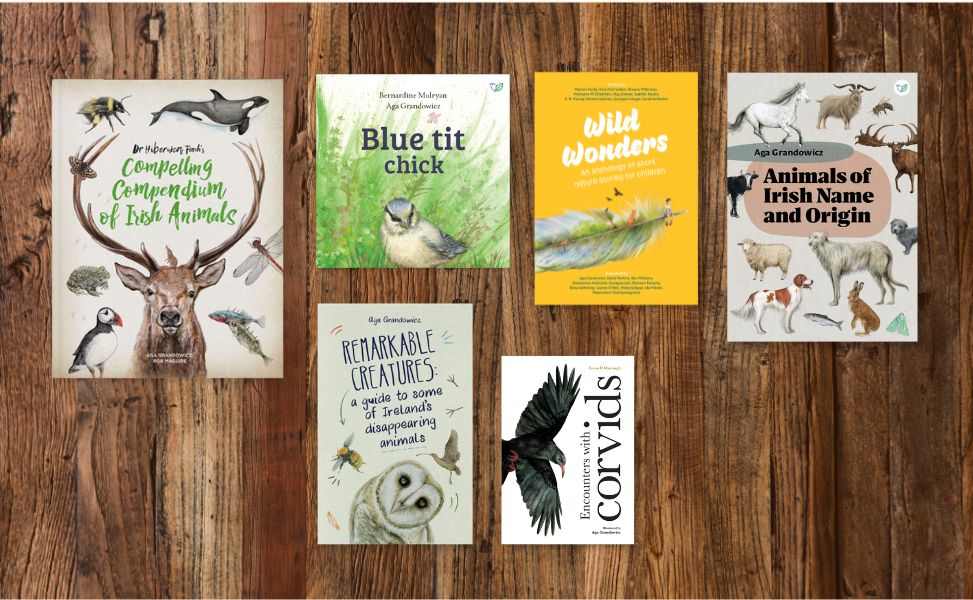
One of my earliest publishing projects was 'Remarkable Creatures: a guide to some of Ireland’s disappearing animals', a book celebrating endangered and often overlooked animals and their extraordinary adaptations. The concept reflected my fascination with the hidden stories of the natural world. Rather than focusing only on well-known species, the book explored creatures that often surprise and challenge our assumptions.
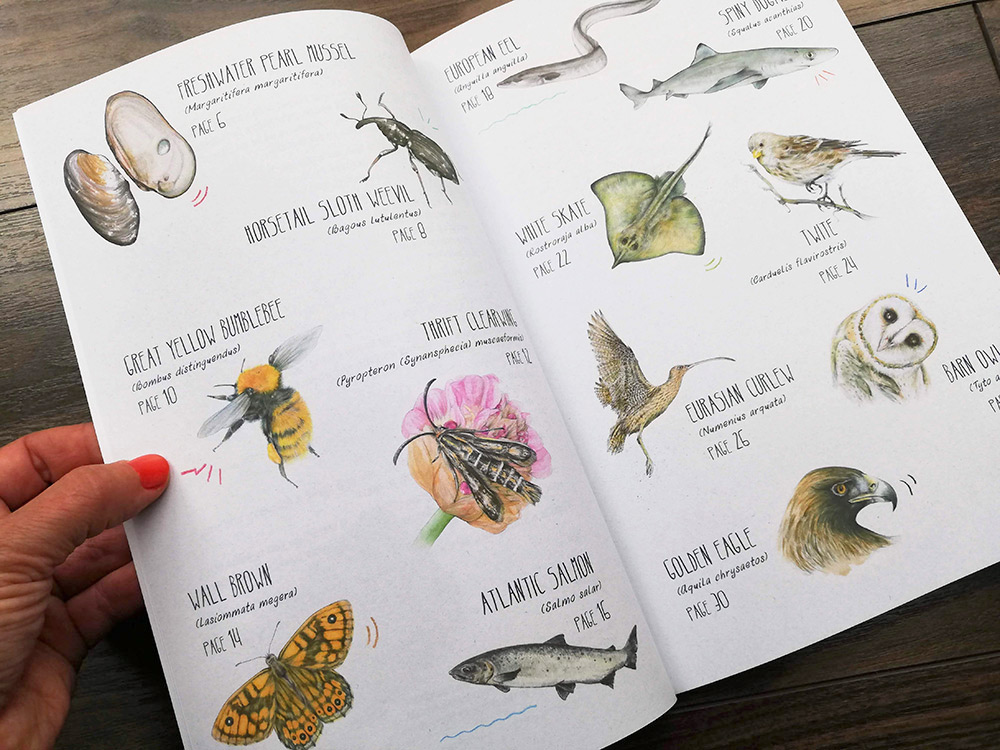
'Dr Hibernica Finch’s Compelling Compendium of Irish Animals' allowed me to explore Irish wildlife through a playful and imaginative approach. Combining natural history with storytelling, the book introduces readers to fascinating native species while encouraging curiosity about the animals that share Ireland’s landscapes. The project reflects my belief that nature education does not have to be presented in a purely academic way. Humour, character and visual storytelling can make wildlife more accessible and memorable, especially for younger readers.
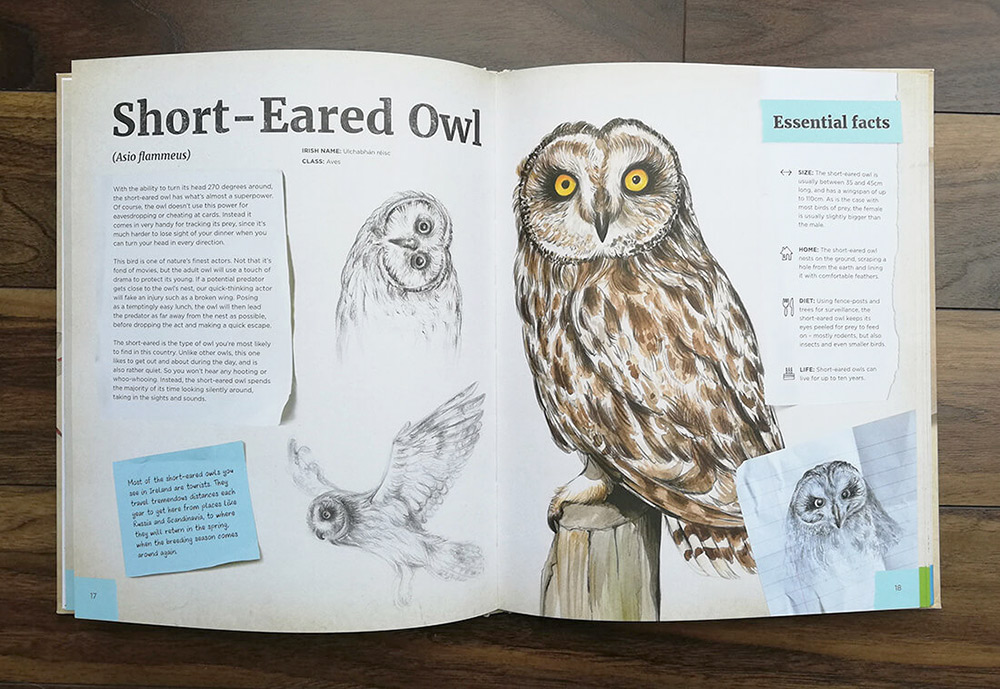
With 'Animals of Irish Name and Origin', I explored the fascinating connections between language, culture and the natural world. The book looks at the stories hidden within animal names, revealing how Ireland’s wildlife is connected not only to its landscapes but also to its history and heritage. It highlights the way words can preserve our relationship with nature, showing that biodiversity is part of our cultural identity as much as our environment.
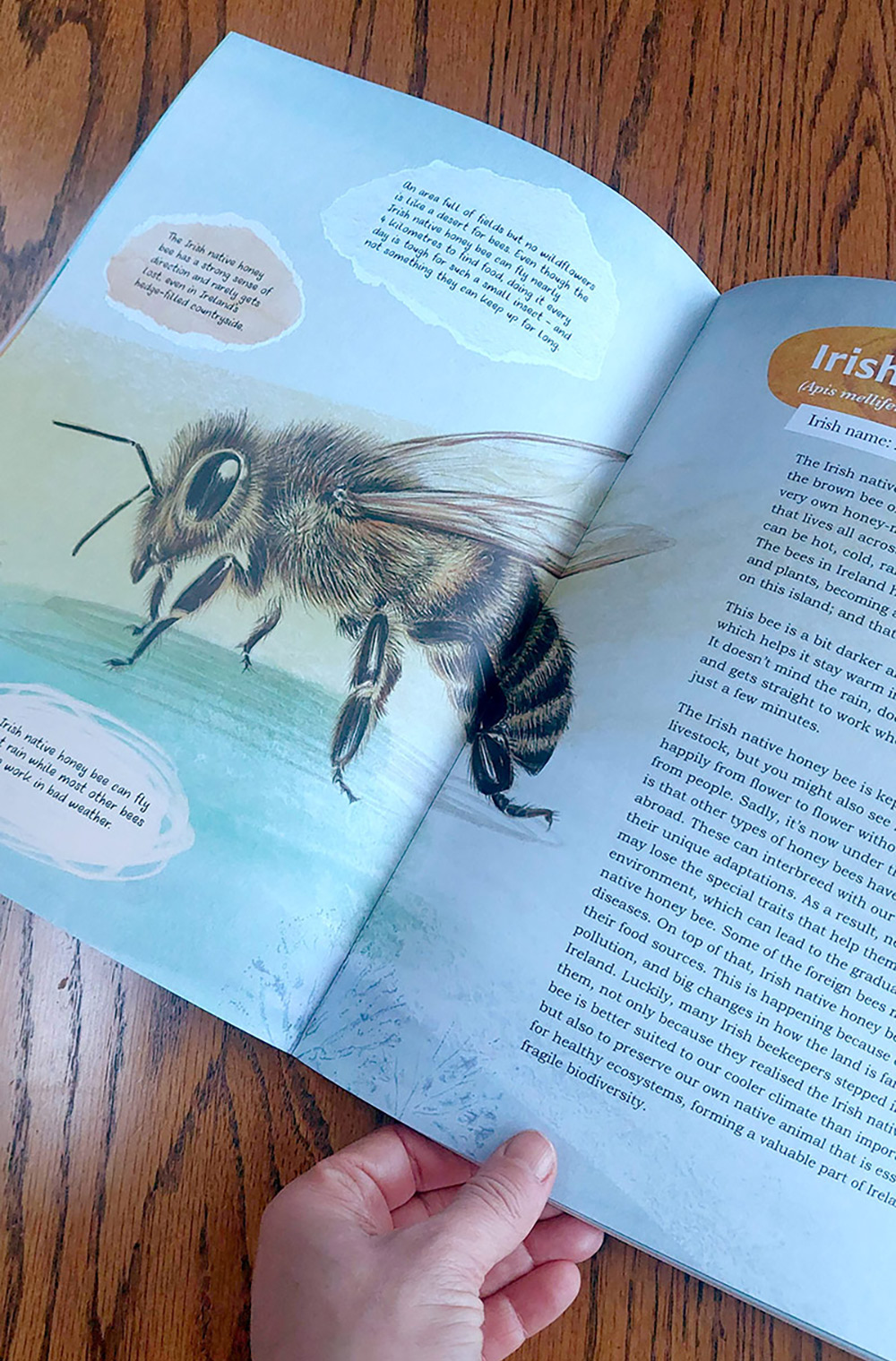
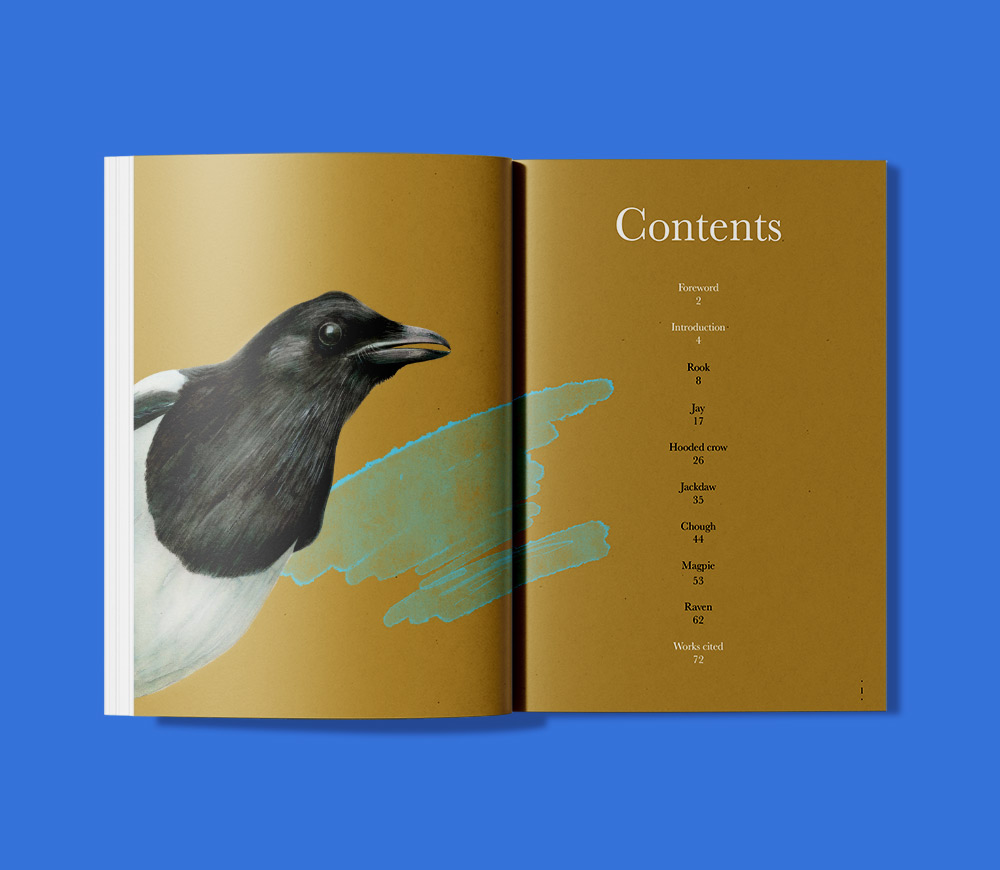
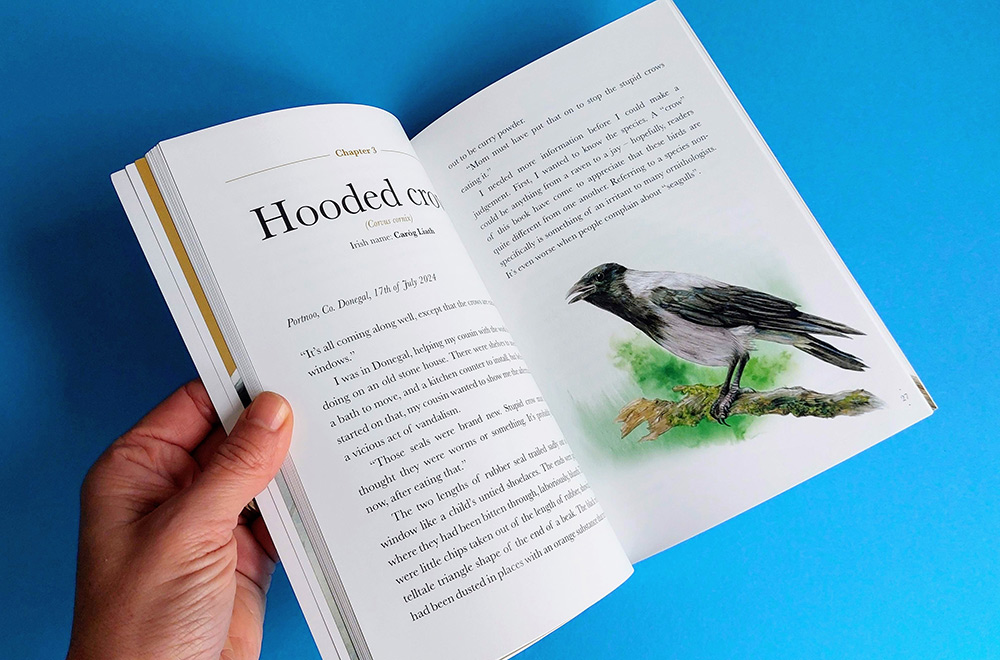
'Encounters with Corvids' gave me the opportunity to focus on one of the most intelligent and misunderstood groups of birds. Corvids, including crows, rooks and ravens, have inspired folklore, scientific research and artistic fascination for centuries. Through this project, I wanted to explore their intelligence, behaviour and unique place within both ecosystems and human imagination, challenging the negative stereotypes that often surround these remarkable birds, and I'm very grateful to Fionn Ó Marcaigh, who provided the best text I could wish for.
Through these projects, I have developed a deeper understanding of the relationship between illustration, publishing and conservation. A book can become more than an object. It can become a conversation starter, an educational resource and a reminder that every species has value.
I have also worked on projects connected specifically with Irish wildlife, creating designs and illustrations that highlight the richness of local ecosystems. Ireland’s natural heritage provides endless inspiration, from coastal landscapes and ancient woodlands to tiny creatures often hidden beneath our feet.
By presenting wildlife through engaging illustrations, thoughtful design and compelling stories, my aim is to help readers see familiar surroundings with fresh eyes and develop a stronger connection with the living world around them.
Designing Books for Children and Adults Alike
Children’s nature books hold a particularly important place in environmental education. The first encounter a child has with wildlife can influence how they see the natural world for years to come.
A beautifully illustrated book can create a lifelong connection. Many adults can remember a particular childhood book that introduced them to animals, forests or oceans. These early experiences often become the foundation for curiosity and care.
When designing books for younger readers, I focus on creating a sense of discovery. Children are naturally curious. They do not need to be persuaded that nature is fascinating. They simply need opportunities to explore it.
Illustration plays a huge role here because images can communicate emotions instantly. A child may not yet understand complex ecological concepts, but they can immediately feel curiosity towards a colourful bird, a mysterious insect or a friendly animal character.
At the same time, adults also appreciate nature books that combine beauty with meaningful content. The strongest publications work across generations, allowing parents and children to discover something together.
A nature book can become a shared experience.
The Future of Nature Illustration and Sustainable Publishing
As environmental challenges become increasingly visible, creative work has an important role in encouraging awareness and action. Scientists provide essential research, conservation organisations protect habitats, and artists help people develop emotional connections with the natural world.
Illustration can reach people in a unique way because it communicates through emotion as well as information.
The future of nature publishing lies in combining thoughtful storytelling, beautiful design and responsible production. Readers increasingly care about where books come from, how they are made and what values they represent.
As a publisher and illustrator, I believe sustainability should influence every stage of the process, from choosing materials to selecting stories that highlight biodiversity.
A nature book is, in many ways, a celebration of the planet. Creating one means taking responsibility for how we represent the natural world and how we encourage others to protect it.
The most successful nature books are not simply about looking at animals. They are about changing the way we see our relationship with them.
Last thoughts
Illustrating and designing nature books is a meeting point between creativity, research and environmental storytelling. It requires understanding both artistic principles and the natural world itself. For me, the most rewarding part of this work is creating moments of connection, helping readers notice species they may have ignored before and encouraging curiosity about the living world.
From my background in graphic design to my current work as a wildlife illustrator and publisher, every project has reinforced the same idea: art has the power to make nature visible.
A well-designed nature book is not just a collection of pages. It is a window into another world, a place where readers can pause, explore and rediscover their connection with the planet.
FAQs About Illustrating and Designing Nature Books
1. What skills are needed to become a nature book illustrator?
A nature book illustrator needs a combination of artistic ability, observation skills and curiosity about the natural world. Understanding anatomy, habitats and animal behaviour helps create accurate illustrations, while storytelling and design skills help transform information into engaging visual experiences.
2. How is wildlife illustration different from scientific illustration?
Scientific illustration focuses primarily on accuracy and documentation, often supporting research or education. Wildlife illustration can include scientific accuracy but usually places greater emphasis on storytelling, emotion and creating a connection between the viewer and the subject.
3. Why is design important in nature books?
Design influences how readers interact with information. Good typography, layout, colour choices and illustration placement make books easier to understand and more enjoyable to explore. A strong design helps create an emotional connection with the subject.
4. Can nature books help with conservation?
Yes. Nature books can raise awareness by introducing people to species, habitats and environmental issues. When readers develop curiosity and appreciation for nature, they are often more likely to support conservation efforts.
5. What makes a nature book memorable?
A memorable nature book combines strong storytelling, beautiful visuals and meaningful information. The best books create an emotional response, making readers feel inspired, curious or connected to the natural world.