Some of the birds we see most often are also the ones we tend to take for granted. A quick flash of blue and yellow at the garden feeder, a tiny bird disappearing into a hedge, or a lively group of long-tailed tits passing through the trees. We might recognise them instantly, but how often do we stop to look at the details?
My latest private commission, Tits of Ireland (yes, that's the title!), brings together four species you can spot here: the Coal Tit, Blue Tit, Great Tit, and Long-tailed Tit. The idea was to bring these familiar birds together in one composition, each perched on the same branch, while keeping the distinctive features that make them easy to tell apart.
Four species, four different characters
Although these birds share a family name, each looks very different.
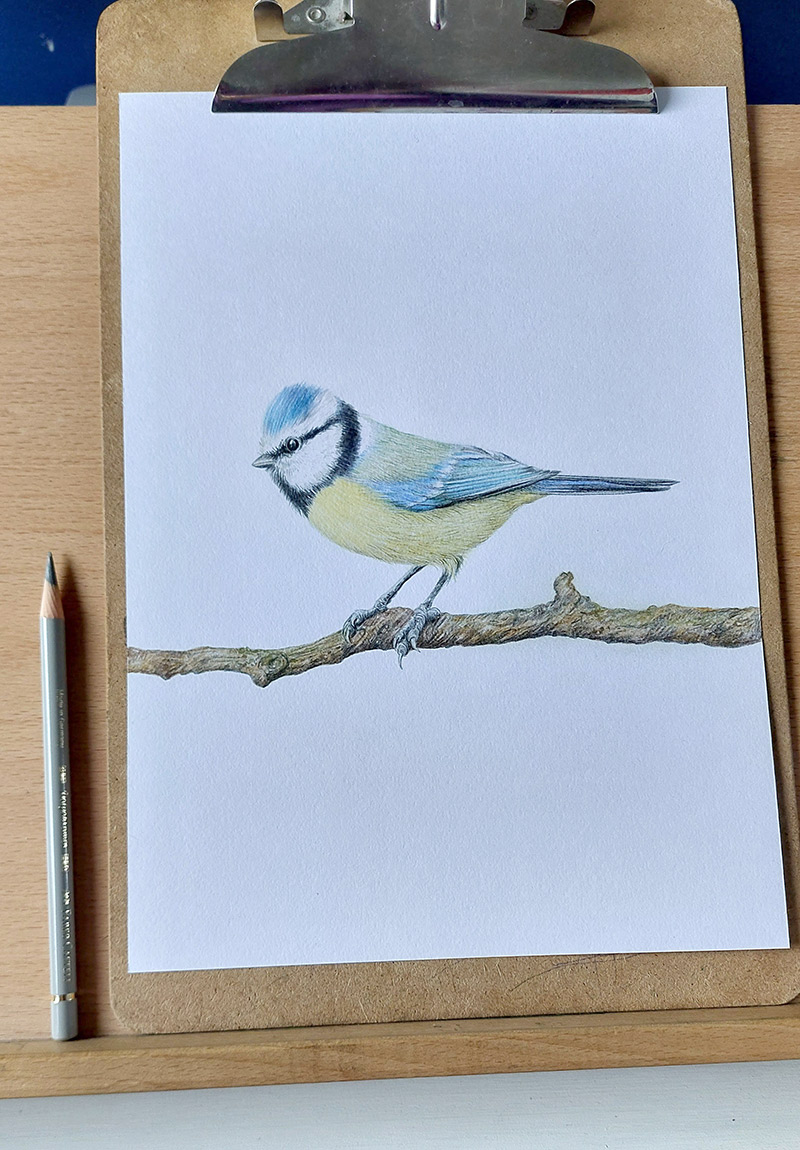
The Coal Tit is small and understated, with a black cap, white nape patch, and subtle grey and buff colouring. The Blue Tit brings a splash of blue and yellow, with a striking blue crown and a lively expression. The Great Tit, the largest of the four, has bold black-and-white head markings and a distinctive dark stripe running down its yellow breast. Then there is the Long-tailed Tit, with its delicate pinkish tones, tiny bill, and wonderfully long tail. It almost looks as though its proportions were designed by someone having a little fun.
Together, they make a lovely subject for an illustration. Their differences create visual interest, but the shared branch brings the composition together.
From pencil sketch to finished illustration
Wildlife illustration requires a balance between careful observation and artistic interpretation. Before adding colour, I work on the shapes, proportions, and posture of each bird. Small details matter: the angle of the head, the shape of the bill, the pattern around the eye, or the way the tail extends beyond the body.
Colour pencils allow me to build up the plumage gradually, layering subtle shades to suggest the texture and variation of feathers. Rather than treating each bird as a flat collection of colours, I try to capture the way those colours work together to give the bird its particular character.
The accompanying video offers a glimpse into this process, from the initial sketches to the developing colour and final composition, showing that a finished illustration often results from many small decisions, adjustments, and layers.
Celebrating the wildlife on our doorstep
One of the things I enjoy most about drawing native wildlife is the chance to spend time closely observing species in our everyday surroundings. You don't necessarily need to travel far to find something worth observing. A garden, a local park, or a walk along a hedgerow can offer plenty of inspiration.
Birds are particularly rewarding subjects because they rarely sit still for long. Illustration gives me the time to study their markings and proportions in a way that a fleeting encounter rarely allows.
If this illustration encourages someone to take a second look the next time a Blue Tit visits their garden, I'll consider that a nice bonus.
Interested in commissioning a wildlife illustration?
I create original wildlife illustrations for private clients, publications, educational projects, and organisations working with nature and biodiversity. You can find more of my work at Natural World Design or get in touch about a commission.