In a world fascinated by the biggest, tallest and most impressive creatures, it is easy to forget that some of nature's greatest wonders are the ones we almost never notice. Sometimes they are hidden beneath fallen leaves, moving quietly through the grass, or disappearing into the undergrowth before we even realise they were there.
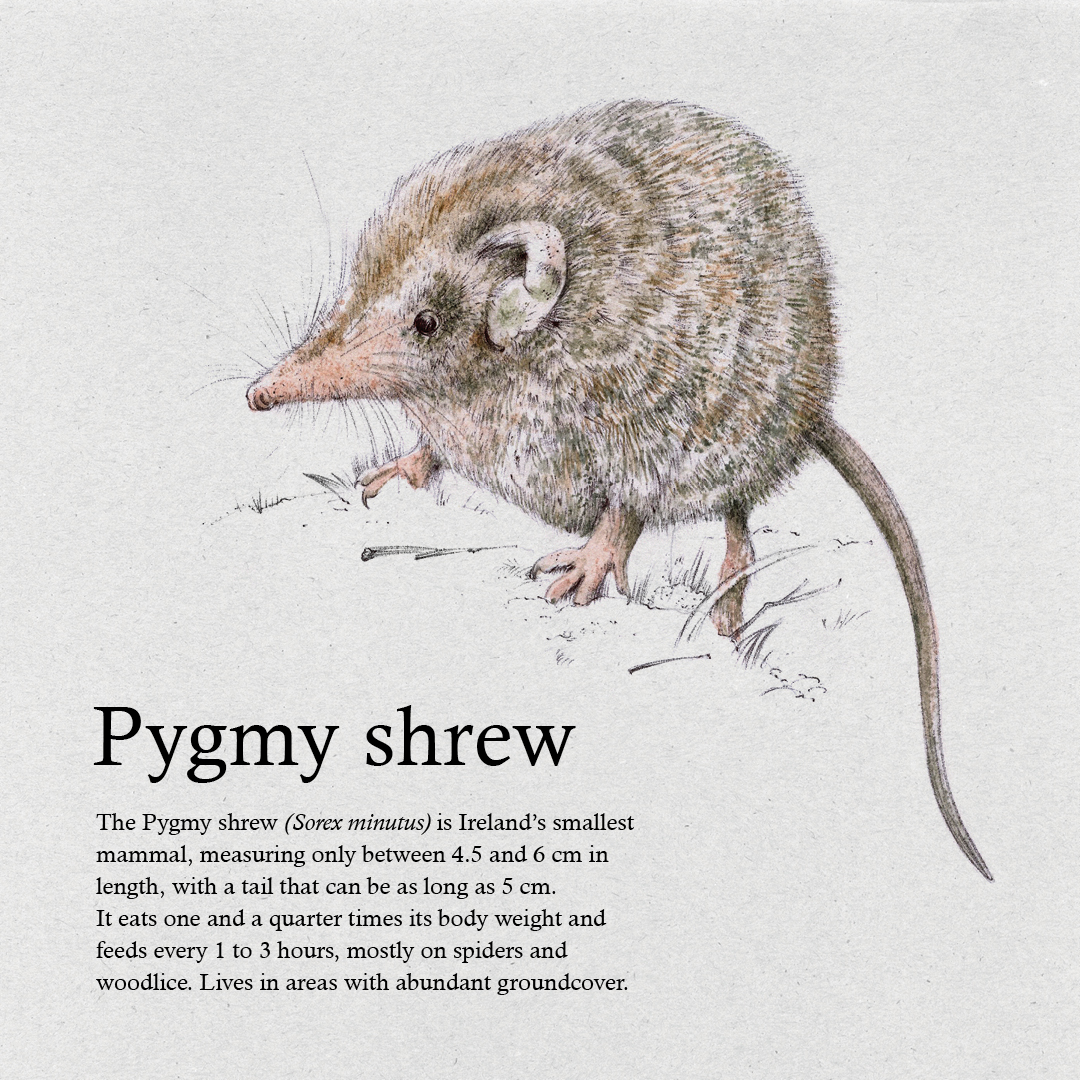
The pygmy shrew (Sorex minutus) is a perfect example. Ireland's smallest mammal may be tiny, but it certainly makes up for its size with energy. Measuring only around 4.5 to 6 cm in length, with a tail that can reach almost the same length as its body, this little insectivore is a fascinating example of how much life can fit into a very small package.
A Tiny Creature with a Big Appetite
The pygmy shrew is a remarkably active little animal. With one of the fastest metabolisms among mammals, it needs to eat almost constantly to keep its energy levels up. It can consume around one and a quarter times its own body weight every day, feeding every one to three hours.
Its menu includes spiders, woodlice, insects, larvae and other small invertebrates. So, if you are not particularly fond of spiders, you might want to thank a pygmy shrew next time you see one (although spotting one is easier said than done!).
These tiny mammals play an important role in the ecosystem by helping to control populations of small invertebrates and keeping natural food chains in balance.
A Hidden Resident of Ireland's Wild Places
Although small and secretive, pygmy shrews can be found in a variety of habitats, including woodlands, grasslands, hedgerows and gardens. They prefer areas with plenty of ground cover, where fallen leaves, vegetation and moss provide both shelter and hunting opportunities.
Even though a pygmy shrew looks like a house mouse, it isn't a rodent at all. Mice belong to the rodent family, but the pygmy shrew belongs to a unique family called Soricidae. This group of animals is made up of true shrews. They belong to a wider order called Eulipotyphla, which means they are actually close biological cousins to underground moles and spiky hedgehogs instead of mice.
Celebrating Timahoe's Hidden Wildlife
This detailed pen and watercolour drawing of a pygmy shrew was created for a biodiversity and heritage information panel in Timahoe, County Laois, Ireland.
Known for its beautiful round tower and rich history, Timahoe is also surrounded by landscapes that support a surprising variety of wildlife. Hedgerows, fields, waterways and pockets of natural habitat create valuable spaces for species both large and small.
Choosing the pygmy shrew for the panel was a way of celebrating one of those easily overlooked residents. It represents the countless small creatures that make up the foundations of healthy ecosystems.
The accompanying text for the panel was provided by Anne Sundermann, highlighting the natural heritage of the area and encouraging people to look more closely at the wildlife around them.
Finding Beauty in the Smallest Details
Creating this illustration with pen was a wonderful opportunity to slow down and appreciate the details of a creature that many people may never have seen.
The fine textures of its fur, the tiny paws and the delicate shape of its face all reveal a level of complexity that is easy to miss when we think about "small" animals.
Wildlife illustration is often about changing perspective. A creature that might disappear beneath your feet becomes something worth stopping for, observing and protecting.