You rarely get a long look at a red squirrel. One moment it's clinging to the trunk of a Scots pine, the next it's racing through the branches with a confidence that makes impossible leaps seem effortless. By the time you've pointed it out to someone walking beside you, it has usually disappeared. Perhaps that's why spotting one feels so memorable.
The red squirrel (Sciurus vulgaris) is Ireland's native squirrel species and one of the country's most recognisable woodland mammals. Although squirrels are found across much of the world, Ireland's red squirrel has become a symbol of healthy forests and thriving wildlife. With its russet coat, creamy white chest and famously bushy tail, it is a favourite among wildlife photographers, artists and anyone who enjoys spending time in nature.
Built for Life in the Trees
Everything about a red squirrel is designed for climbing. Its sharp claws grip rough bark with ease, while powerful hind legs allow it to leap between branches several metres apart. The long, fluffy tail is more than just decoration. It acts as a counterbalance when climbing, helps with steering during jumps and even provides warmth when wrapped around the body on cold winter days.
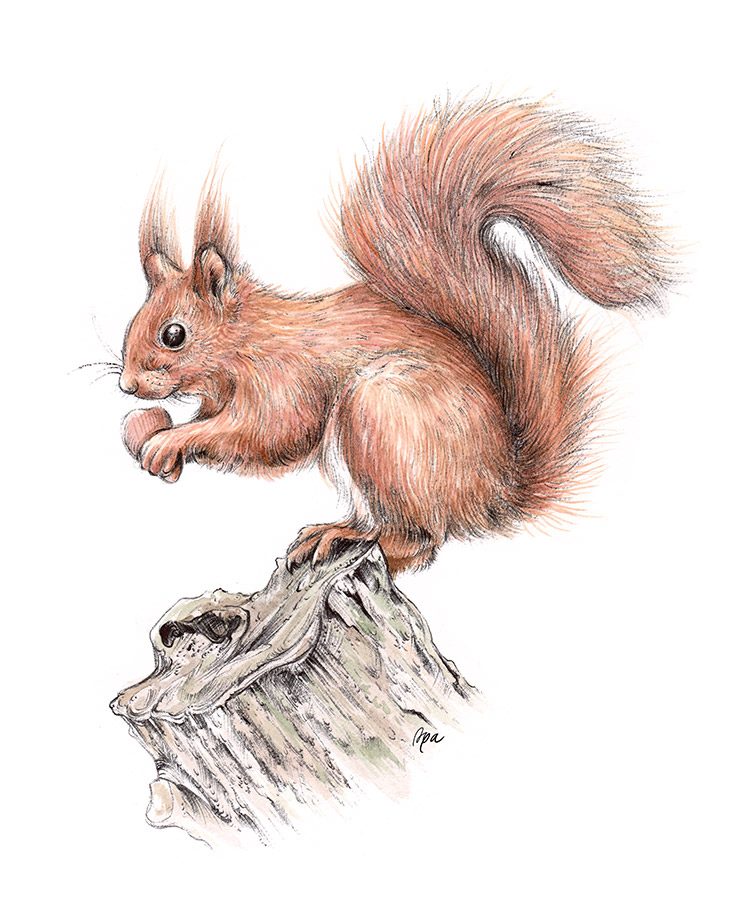
One of the squirrel's most charming features is its pointed ears, crowned with distinctive tufts during the winter months. Combined with large, dark eyes and constant curiosity, they give the animal an alert expression that artists have tried to capture for generations.
What Do Red Squirrels Eat?
Most people associate squirrels with hazelnuts, but their diet is surprisingly varied. They feed on seeds from pine cones, hazelnuts, acorns, beech mast, berries, buds and fungi, changing their menu as the seasons change. They occasionally eat insects or bird eggs, although the vast majority of their diet comes from plants.
Autumn is their busiest time of year. As food becomes plentiful, squirrels hide hundreds of nuts and seeds beneath leaves or in shallow holes across the woodland. These hidden stores help them survive the winter, although they never recover every cache. The forgotten seeds often grow into new trees, making squirrels unexpected partners in the natural regeneration of forests.
A Native Species Making a Comeback
For many years, Ireland's red squirrel faced increasing pressure from the introduced grey squirrel, which competed for food and habitat. As grey squirrel numbers expanded, red squirrels disappeared from many woodlands, leading people to fear that the native species might eventually vanish altogether.
Fortunately, the story has become more hopeful. The recovery of the native pine marten has helped reduce grey squirrel populations in several parts of Ireland. Because red squirrels have evolved alongside pine martens for thousands of years, they are generally better at avoiding them than grey squirrels. As a result, red squirrels have returned to woodlands where they had not been seen for decades, providing one of Ireland's most encouraging wildlife success stories.
You can also help researchers understand how red squirrels are adapting to changing landscapes. The Urban Squirrel Survey is collecting sightings from towns, cities and urban parks across Ireland, helping scientists learn more about squirrel populations and the role that green spaces play in supporting native wildlife. If you spot a red squirrel in your local area, consider recording your sighting and becoming part of this important citizen science project.
Why Red Squirrels Matter
Red squirrels are far more than attractive woodland residents. By burying seeds and nuts throughout the forest, they help new trees become established. Their presence is also a sign of healthy woodland, rich in mature trees, diverse habitats and interconnected wildlife.
Watching a red squirrel reminds us how much life exists above our heads. While many woodland visitors keep their eyes on the path ahead, squirrels spend almost their entire lives in the canopy, moving through an aerial world that often goes unnoticed.
Wildlife Art Inspired by Nature
The appeal of the red squirrel lies not only in its appearance but also in its character. It seems endlessly curious, energetic and alert, making it one of the most rewarding subjects for wildlife artists. Capturing that personality is often more important than reproducing every strand of fur. A slight tilt of the head or a momentary pause with a pine cone can tell a much richer story.
Drawing a red squirrel is a chance to capture a moment that most people only see briefly in the wild. The quick movements, alert expression and vibrant colouring make this little animal a fascinating subject for illustration. With this artwork (available to buy through my online shop), I wanted to share some of the charm of an encounter with a red squirrel and bring a piece of Ireland's woodland wildlife into everyday spaces.
Frequently Asked Questions
Are red squirrels native to Ireland?
Yes. The red squirrel is Ireland's native squirrel species and has been part of the country's wildlife for thousands of years.
What do red squirrels eat?
Their diet mainly consists of seeds, pine cones, hazelnuts, berries, fungi and other plant material, with occasional insects or bird eggs.
Where do red squirrels live?
They live in mature woodlands, particularly forests containing conifers, hazel, beech and other native trees that provide food and nesting sites.