In an age of smartphones, digital calendars and productivity apps, paper diaries continue to thrive. At first glance, it may seem surprising. After all, our phones can remind us about meetings, synchronise calendars across devices and store endless notes. Yet many people still choose a beautifully designed diary to organise their lives. Why? Because a diary is far more than a planning tool. It is something we interact with every day. It sits on our desk, travels in our bag, records our achievements, appointments, dreams and memories. Unlike a book, which we might read once, or a piece of artwork hanging on a wall, a diary becomes a companion for an entire year.
That daily interaction creates a unique opportunity for illustration. Every page turn becomes another encounter with nature. Every month introduces another species. Every glance reminds us that there is a world beyond emails, meetings and deadlines. As a wildlife illustrator, I find that incredibly exciting.
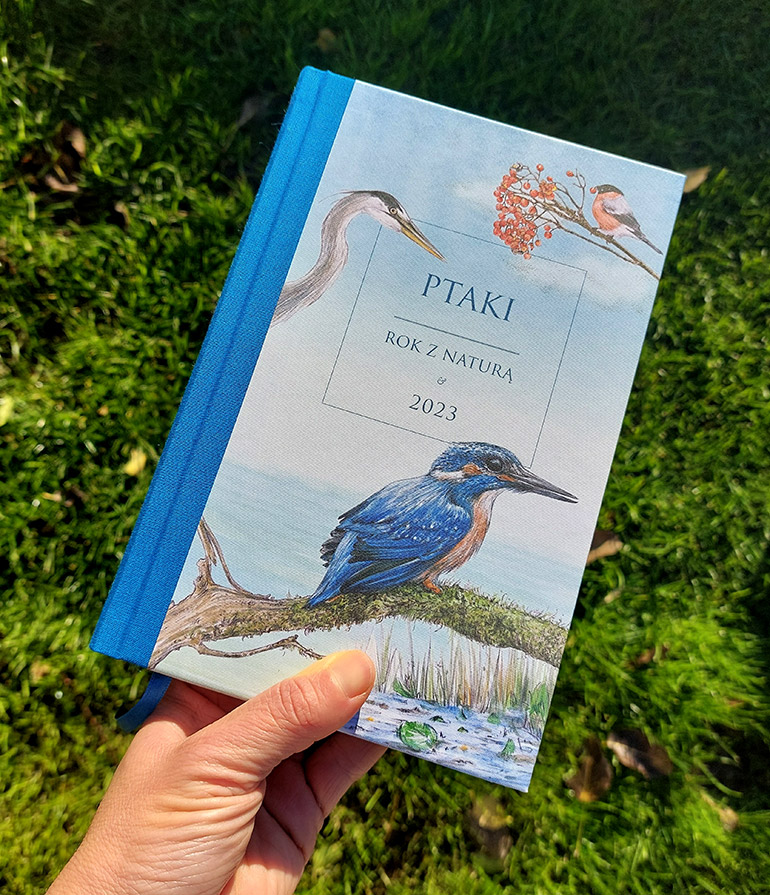
Recently, I had the pleasure of illustrating a bird diary featuring some of Poland's most recognisable birds. Working on this project made me think about the unique role illustration plays in products that people return to again and again, and why nature-themed diaries remain such enduring gifts for bird lovers, conservation organisations and publishers alike.
Why Commission an Illustrated Nature Diary?
Illustrated diaries occupy a fascinating space between publishing, design and fine art. Unlike traditional books, they are not consumed from beginning to end. Instead, they unfold gradually over twelve months. The illustrations become familiar companions, quietly enriching everyday routines. For publishers and organisations, this creates enormous value.
A thoughtfully illustrated diary can:
- strengthen a publisher's identity
- create an emotional connection with readers
- transform a practical object into a keepsake
- encourage people to engage with wildlife throughout the year
- offer educational value without feeling educational
- stand out in an increasingly crowded gift market
Nature illustration is particularly effective because it appeals to curiosity. A beautifully illustrated goldfinch is not simply decorative. It invites questions: Where does it live? Have I seen one recently? The artwork becomes the beginning of a conversation.
Why Birds Make Perfect Diary Companions
Birds naturally fit the rhythm of a calendar. Unlike many other animals, their lives visibly change with the seasons. Spring brings courtship displays and nesting. Summer fills hedgerows with fledglings. Autumn marks migration. Winter reveals species that suddenly become much easier to spot once leaves have fallen. This seasonal rhythm mirrors the structure of a diary remarkably well. Instead of feeling like repeated decoration, each illustration reflects a different moment in the natural year. Even familiar species begin telling different stories depending on the month in which they appear.
The Commissioning Process
People often imagine wildlife illustration begins with drawing. In reality, drawing is only one part of a much larger process.
Understanding the Purpose
Before the first sketch is produced, I like to understand the project itself. Questions might include:
- Who is the diary for?
- Is it aimed at birdwatchers, families or the general public?
- Is it educational or primarily decorative?
- Will it be sold commercially or distributed by an organisation?
- What feeling should readers experience throughout the year?
Answering these questions influences every artistic decision that follows.
Selecting the Species
Species selection is about much more than choosing attractive animals. A balanced diary usually benefits from variation. Large and small birds. Colourful and understated species. Garden favourites alongside lesser-known wildlife. Different habitats. Different seasons. Together they create visual rhythm throughout the publication.
Research Comes First
Scientific accuracy matters. Every illustration begins with careful observation. I study reference photographs, anatomical details, plumage, proportions, behaviour and posture before putting pencil to paper. The challenge is finding the point where scientific observation meets artistic interpretation. Readers should immediately recognise the species, but they should also feel something when they look at it.
Creating the Artwork
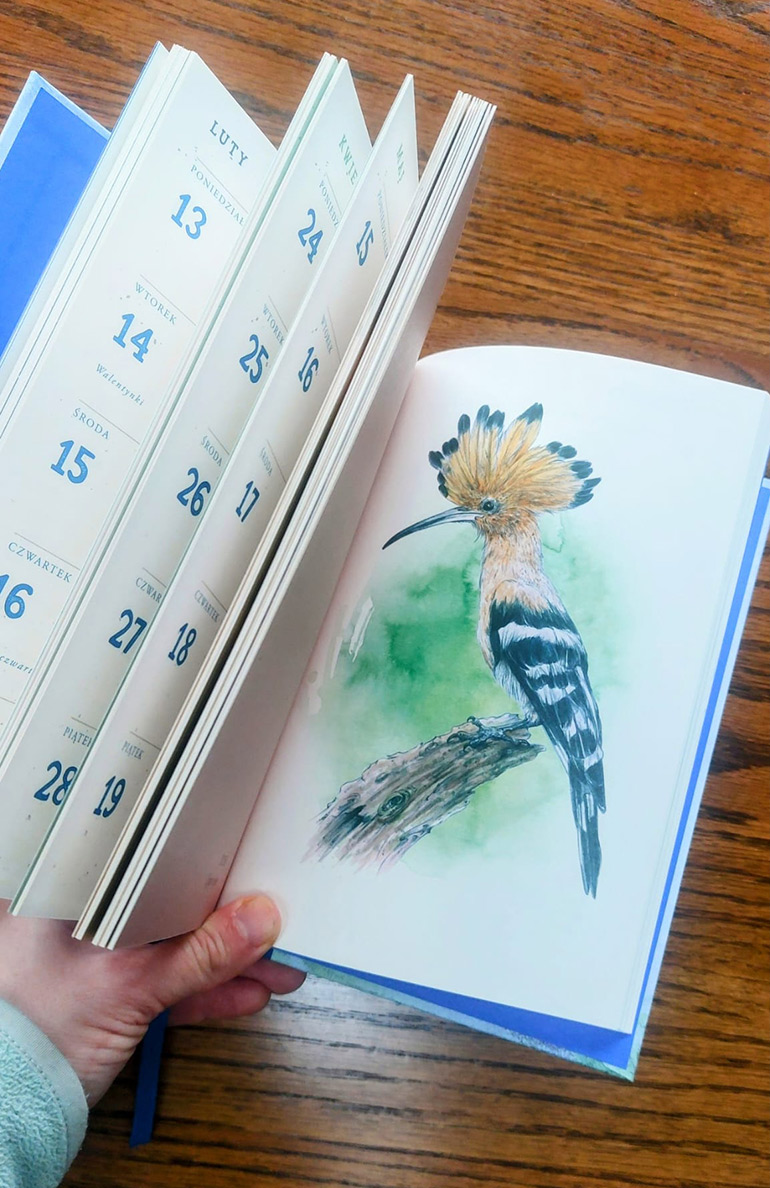
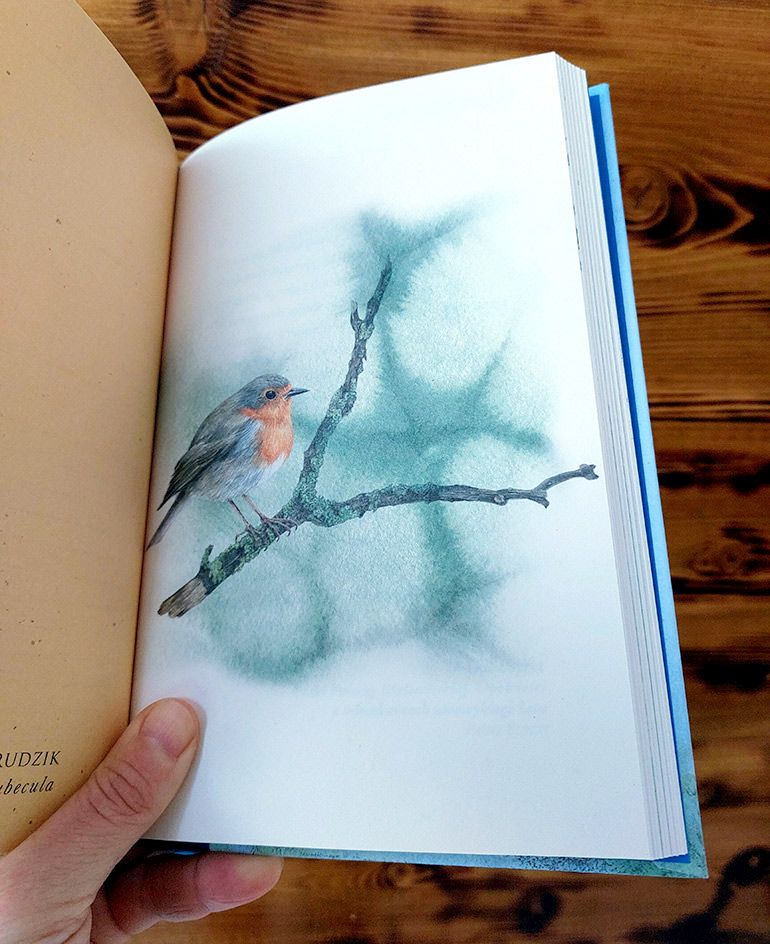
For this diary, I worked primarily in ballpoint pen and watercolour. Layer by layer, colours gradually build depth, allowing subtle feather textures and delicate tonal changes to emerge naturally.
Although digital illustration has many advantages, traditional media often produces a warmth that suits wildlife particularly well. Every feather is built patiently. Every highlight is considered. There are no shortcuts.
Preparing Artwork for Print
Creating illustrations is only part of the job. Artwork intended for publishing must also work technically. Resolution, colour profiles, page dimensions, bleed, typography and printing methods all influence the final result.
As someone with a background in graphic design as well as illustration, I enjoy this stage just as much as drawing itself. It allows the artwork to integrate seamlessly with the publication rather than feeling like separate decorative elements. For publishers, this means fewer surprises during production and a smoother workflow from concept to print.
A Case Study: Illustrating a Bird Diary
One of my recent commissions involved producing illustrations for a diary dedicated to Polish birds. The project featured a selection of iconic species, including:
- White-tailed Eagle
- Great Spotted Woodpecker
- Hoopoe
- Bullfinch
- Kingfisher
- European Robin
- Great Tit
- Peregrine Falcon
- Tawny Owl
- Bohemian Waxwing
Each bird presented its own artistic challenge. Some are famous for dramatic colours. Others rely on subtle feather patterns. Some are instantly recognisable in flight, while others are known for characteristic poses or behaviour.
The goal was not simply to produce attractive pictures, but to create illustrations that remained scientifically accurate while retaining warmth, personality, and my artistic creativity. A diary accompanies someone every day. Its illustrations deserve to feel alive.
What Makes a Successful Illustrated Diary?
Beautiful drawings alone are not enough. The strongest diaries create an experience. That experience comes from careful collaboration between illustrator, editor, designer and publisher.
Some important considerations include:
Visual Consistency
Although each illustration should have its own character, the collection needs to feel cohesive. Consistent lighting, colour palette and artistic style help create a publication that feels unified from January through December.
Space to Breathe
Illustrations should support the diary rather than compete with it. Readers still need room to write appointments, notes and reminders, so the artwork has to complement the layout rather than overwhelm it. Finding the right balance between aesthetics and functionality is one of the most enjoyable aspects of designing an illustrated diary.
Educational Value
Many illustrated diaries include short species descriptions, seasonal facts or conservation messages. Small pieces of information encourage readers to pause for a moment and learn something new without interrupting the diary's practical purpose.
More Than Birds
Although birds work beautifully in diaries, they are only one possibility as nature offers endless inspiration. Illustrated diaries could equally focus on:
- native wildflowers
- pollinating insects
- woodland mammals
- butterflies
- fungi
- marine life
- trees
- seasonal landscapes
- national parks
- endangered species
The same approach can also be adapted for botanical journals, nature planners, educational calendars or visitor centre publications.
Why Original Illustration Makes a Difference
Photographs or stock images certainly have their place. Original illustration offers something entirely different – iIt gives a publication its own identity. The artwork is created specifically for the audience, the message and the publication itself.
Every species can be selected deliberately. Every composition is designed around the layout. Every illustration becomes part of the publication's visual language. That level of individuality is difficult to achieve using existing imagery.
The Value Beyond Publication
One advantage of commissioning original illustrations is that they rarely end their lives inside a single publication.
The same artwork may later appear in:
- exhibitions
- educational posters
- interpretation panels
- greeting cards
- calendars
- social media campaigns
- exhibitions
- limited-edition prints
- marketing materials
In my own case, several of the bird illustrations created for this diary are now available as fine art prints, allowing them to continue reaching new audiences beyond the pages of the original publication. A well-planned commission can therefore provide value for many years after publication.
Frequently Asked Questions
Can illustrations be created around an existing layout?
Yes. Some projects begin with finished page templates, while others are developed collaboratively from the earliest design stages.
Can the artwork include scientific accuracy?
Yes. Scientific observation is a fundamental part of my process, while still allowing room for artistic expression.
Do you work with publishers?
Yes. I enjoy collaborating with publishers, designers, conservation organisations and educational institutions, adapting the artwork to suit each project's objectives.
Looking to Commission an Illustrated Nature Diary?
Whether you are developing a bird diary, a botanical journal, a conservation publication or another nature-inspired project, I would be delighted to hear about your ideas.
From the initial concept to finished illustrations ready for print, I enjoy working closely with publishers, organisations and designers to create artwork that informs, inspires and stands the test of time.
If you have a project in mind, feel free to get in touch. I'd love to help bring it to life.
Key Takeaways
- Illustrated diaries create a daily connection between readers and nature.
- Wildlife illustration transforms practical stationery into lasting keepsakes.
- Original artwork gives publications a distinctive visual identity.
- Careful planning ensures illustrations support both aesthetics and usability.
- Species selection should reflect the audience, seasonality and educational goals.
- Professionally commissioned illustrations can continue adding value long after publication through exhibitions, prints, educational resources and marketing materials.